Wednesday, July 22, 2020

REVIEW: Black Water Rising

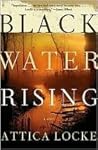
Black Water RisingBlack Water Rising by Attica Locke
My rating: 4 of 5 stars

Set in 1981 Houston, TX, Black Water Rising is a story of power and political corruption in high places. Jay, the main character, is a Black lawyer who must make the choice to either look the other way and stay safe, or risk everything and expose the truth. Heightening that risk is the fact that he is married with a baby on the way. He knows that everything he does has implications for the woman he loves. Moreover, Jay has a past he can't escape. It has shaped him into the complex person he is, and informs his actions.

A favorite part of this book is how author Attica Locke writes the dialogue between Jay and Christine, Houston's mayor. The two are old friends and their sparse conversations are just enough to indicate their deep, complicated history. I also found Locke's subtext intriguing. It centers on themes of identity, loyalty, and trust. My least favorite part of this book is the author's writing of Jay's wife. Her character seemed flat and her reactions to Jay did not ring true. Overall I give this book 4 stars. Locke's deftness at weaving Black Panther history into the narrative enriched this story immensely.


View all my reviews

REVIEW: The Pearl That Broke Its Shell

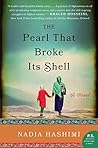
The Pearl that Broke Its ShellThe Pearl that Broke Its Shell by Nadia Hashimi
My rating: 5 of 5 stars

What a fascinating story by a skillful author. This work of fiction is set in 2007 Afghanistan. It centers around a family that has only female siblings. As author Nadia Hashimi shows, this places the entire family in a precarious situation: girls/women cannot move about freely and unmolested in public.  Thus, who will buy food and oil from the market?  And Who will chaperone the girl children when they leave the house? The answer they turn to is the ancient custom of bacha posh, which allows Rahima, one of the siblings, to dress and be treated as a boy until she is of marriageable age. 

The freedom and expansive life Rahima experiences as a boy is in stark contrast to the limitations placed upon her sisters.  Even her father — who knows she’s really a girl — treats her better.  When Rahima becomes a teenager and is forced to get married, she misses the freedom of being male. Moreover, having lived free makes the physical and emotional abuse she experiences in her marriage all the more difficult to endure.

My favorite part of this book was how the author made Rahima's handicapped aunt a central character in the narrative. Though ostracized for her deformity, her character was strong and willful. She empowered her nieces by telling them stories and advocating for them, even when their own mother could not. I give this book 5 stars.


View all my reviews